First Time Founder at 38
What Year 1 Actually Looks Like

A note to my Next Big Thing careers community: thank you for following my work on careers in tech and leadership.
This newsletter is evolving — I'll be sharing my journey and lessons learned as I head into year two as a first-time founder.
If that's not what you signed up for, no hard feelings — unsubscribe here.

I left a Senior Account Executive role in cloud sales to found an AI startup in 2025. Here’s what I wish someone had told me before I made the jump.
The Jump
When my mom’s cancer came back, I needed time off to fly home to Seattle. Everyone at work was supportive – to a point. I found myself haggling with my manager and skip-level for two weeks away, feeling like I was asking for a big favor rather than meeting a family obligation.
This wasn’t a request to work from Bali for my Instagram presence. It was flying home as an only child for my mother’s aggressive cancer treatment.
I got the two weeks. It was generous by corp standards. But you can’t measure family in PTO days.
A year later, I got another call. My dad was struggling with caregiver fatigue after two years of non-stop treatments – three rounds of aggressive cancer care for my mom. He needed support. Within two weeks, I was on a plane. I spent four weeks in the States: one week at an industry conference, three weeks in Seattle with my parents.
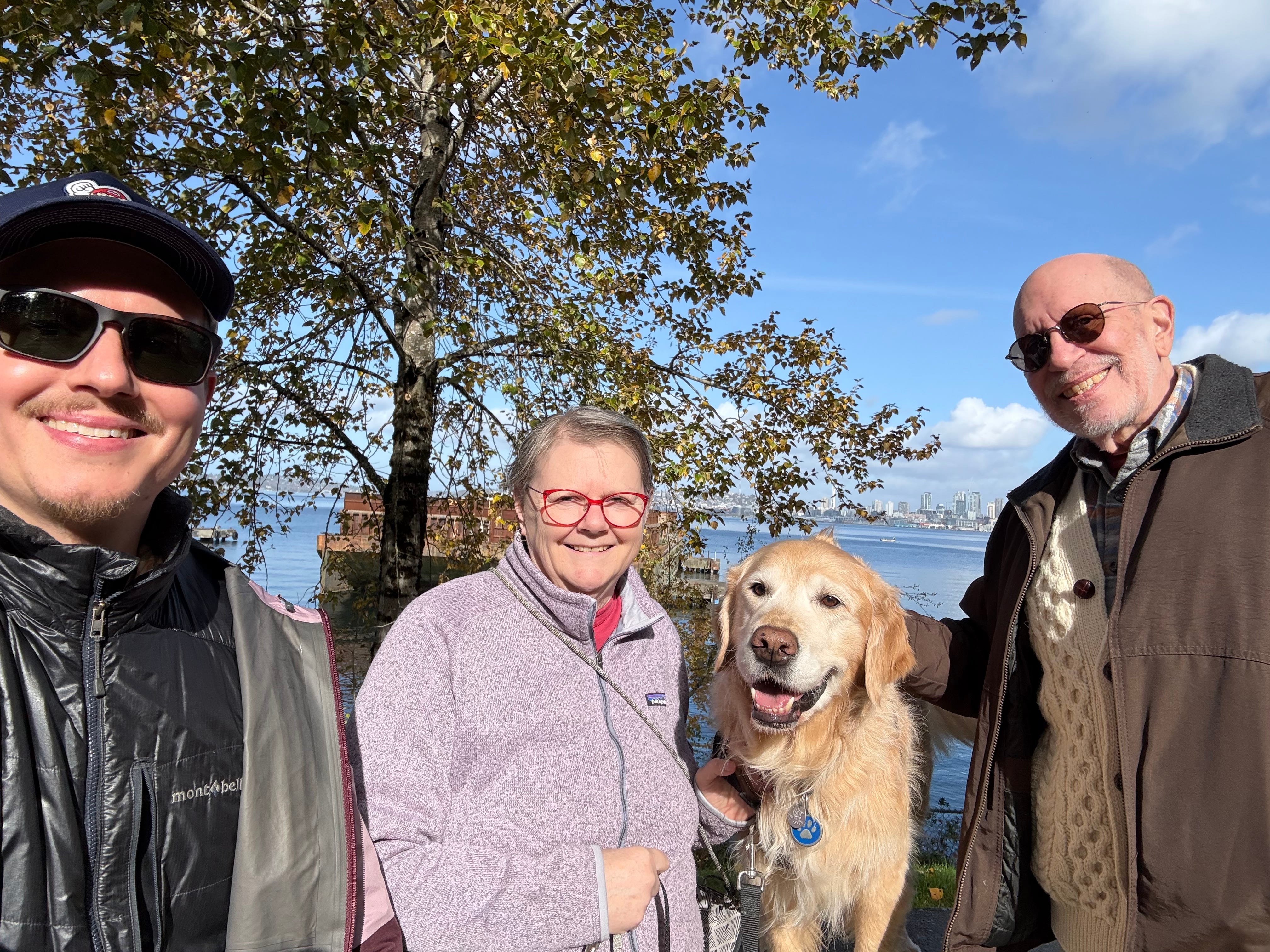
While I was there, I started going to a local gym. My parents got curious. Now they’re both going 3 times a week with trainers who understand working with clients in their 70s. My mom isn’t even the only cancer patient in her workout group.
If I hadn’t had the flexibility to travel – if I’d spent three days with them before jetting back to my “territory” – I wouldn’t have been there when my dad needed me most. My parents never would have started this routine before Seattle’s winter hit. That win matters more to me than any sales deal I’ve ever closed.
My financial reality
My wife and I have been diligent savers, inspired by the Financial Independence movement. When I proposed bootstrapping a startup, she raised a valid concern: we’d been saving for years, and bootstrapping a startup was sub-optimal from a pure personal finance perspective.
She was right. We talked through it over several weeks. The final agreement wasn’t “let’s do this!” It was closer to: “I understand this is suboptimal. I’m okay with it up to $50K – and not past that. Now that you have my support, stop checking in. I don’t want to be involved in the details of how it’s going or how you’re spending the money.”
That boundary has been healthy for both of us.
We structured the $50K in two tranches: $25K for a prototype we could demo to customers, then an additional $25K unlock only if customer meetings created real pipeline. Built-in traction gates.
The timing was complicated. We were also closing on an apartment – our first home after six years of searching. German banks wouldn’t easily lend to us because of my visa situation. So we were asking ourselves: “How do we fund this startup AND close on a home?”
We did both. It wasn’t fun, but it worked.
Why Germany helped
I have to acknowledge that Germany is a uniquely supportive place for this kind of transition. Not because of startup-friendly laws or innovative tax structures – but because of Arbeitslosengeld, a mandatory unemployment benefit. After paying into this for years (mandatory - no opt out) I received 12 months of cash support and full health insurance from the government. The system is designed for job seekers, so I bent the rules slightly by exploring founder life while technically remaining open to employment.
This gave me a year of experimentation with monthly income and health coverage intact.
I didn’t have to relocate to SF and raise a million dollars just to validate an idea.
I didn’t suffer credit card debt or a health insurance crisis. My wife and our cat thanked me for this.
The Hidden Work
Startup culture shows you the founder onstage, fundraising, announcing milestones. What you don’t see is that same founder in customer meetings, getting rejected, watching call replays to sharpen the pitch.
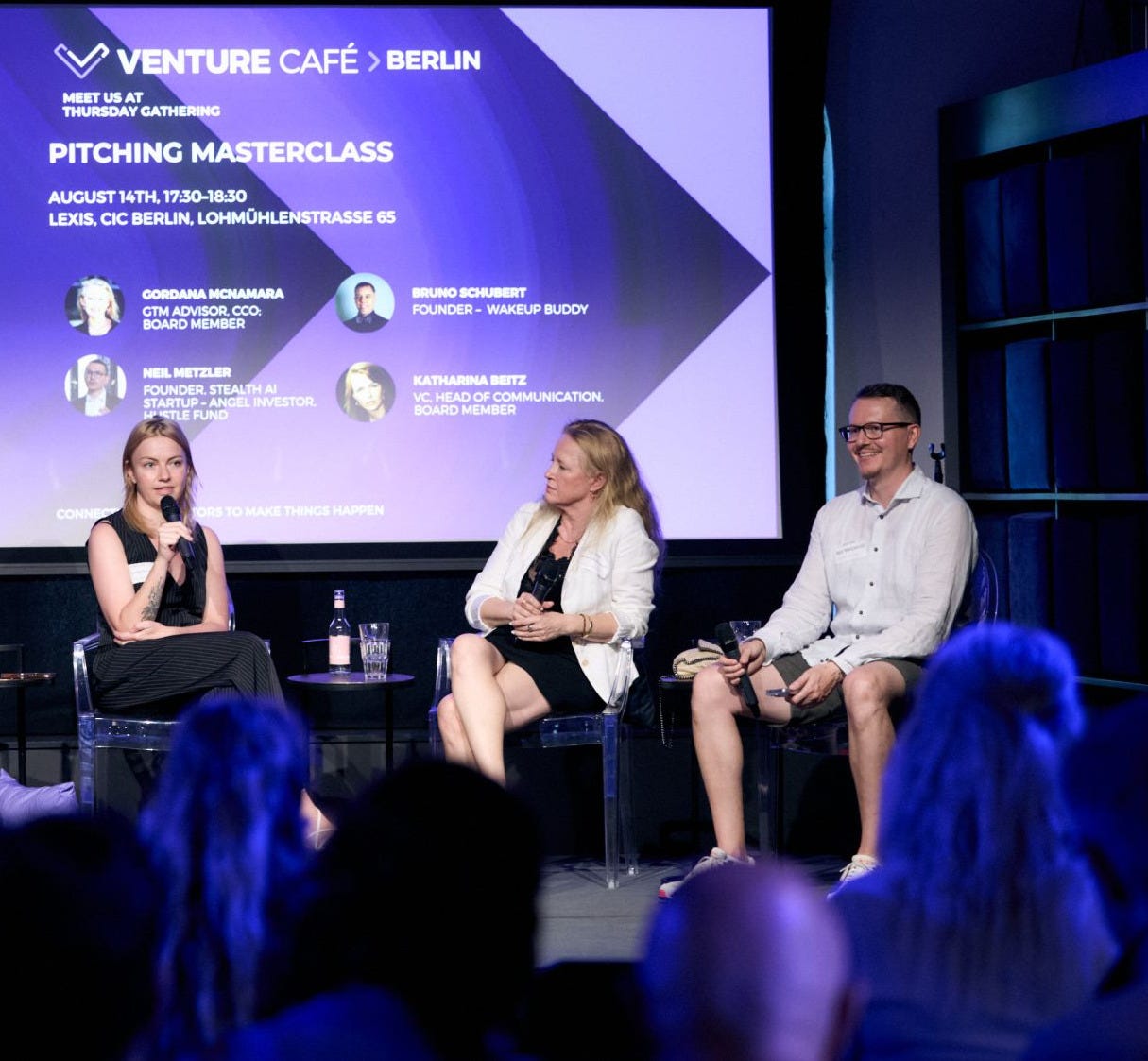
Selling a new category
I spent years selling AWS – an established category with budget lines, RFPs, and inbound demand. Now I’m selling something customers don’t know they need yet. There’s no established budget for our category. We’re chipping into MDF, finding space on product roadmaps already packed with priorities.
The biggest thing I had to unlearn: “I’m communicating with you as a seller” became “I’m selling to you as a founder.” As a founder, I can share my own passion and vision for the product. In enterprise sales, I was relentlessly focused on discovery. Now I focus on building shared understanding of the problem space, earning trust through my conviction that ‘there’s a better way’.
Early customer conversations were rough. One prospect told me: “You’re pitching me something I would love to have – but I can’t use, because I don’t control the UI.”
That stung. I’d walked up cold to their booth at a conference, followed up persistently, got their CEO on a call using his calendar link – and in the first five minutes, they qualified me out.
But other conversations gave me fuel. A global platform M&A analyst told me:
“By feeding these insights into our pricing engine, we can refine in-play odds to reflect how fans are feeling as the game unfolds – an innovation we currently don’t have.”
You hold onto those quotes.
What a week actually looks like
Friends ask what it’s like without a quota and a manager. Here’s the honest answer: I felt much more clarity once I went to conferences and started talking to customers. During the prototyping stage, I overindexed on tech milestones and R&D.
I remind myself constantly to talk to customers earlier.
A typical day starts after breakfast, making sure the team is unstuck and clear on priorities. I might prep for a compliance review, then work on our investor deck incorporating feedback from lawyers and advisors. By 7pm I’m hitting LLM fatigue and diminishing returns.
The difference from corporate life: I can vacuum the house, read some Seahawks news, walk to the bakery in the morning – instead of hauling to the train station for a 8:30AM trip to Munich or Frankfurt covering a sales event.
There are real advantages to this structure. Faster decision cycles: I’m the financial, technical, product, and marketing decision-maker.
Once I greenlight something, it gets resourced. No translation gap between customer insights and product. I’m on a customer call, then roadmap meeting, then engineer 1:1s. Vision, insight, and execution are unified.
How I know I’m making progress
You still track everything – CRM, expenses, forecasts. Creating a data room is hugely reassuring. Here’s your market analysis. Here’s your Year 1 GTM. Here’s your three-year financial forecast.
But the real signals are different. I know things are working when industry veterans offer warm intros, ask if I’m fundraising, ask how they can get involved. When engineers who started as freelancers or interns ask if they can continue on a voluntary basis after starting their next job – because they’re not ready to leave the problem space, and they’re learning and growing with us.
The Mental Game
If you’re used to back-slaps and high-fives, sales bonuses and win slides, customer case studies – founder life is not as comfortable.
The external validation loop is more ‘delayed gratification’.
Managing expectations
We had a big opportunity with an enterprise partner. I’d met their global head of startups face-to-face in Vegas, and he brought us in on an RFP he believed would be a strong fit. We spent four weeks going all-in – engineering at 120% capacity.
We delivered an excellent demo. But enterprise cycles are enterprise cycles. The decision timeline extended to Q2. We’d done everything we could; now we needed to let their internal process run its course.
For a week after that call, I questioned my judgment. Was I forgetting that we’re a pre-revenue startup, and what we really need is one pilot customer – not an enterprise partner on 24-month planning cycles?
I reminded myself to manage my own expectations and the team’s. We’d executed well. The partnership remains valuable. But I was on tilt for about a week, unsure where to redirect our energy.
‘Staying Neutral’
When that early prospect qualified me out in the first five minutes, I needed to step back for 24 hours. I went to band practice, hit the gym, read the newspaper. I was frustrated with myself for not qualifying the opportunity better earlier.
I reminded myself that I’m new to this industry. I don’t know all the basics yet of who does what, who owns what. A few days later, that setback helped me recalibrate our go-to-market and re-prioritize our lead pool.
That’s the practice: process the frustration, then let the lesson sharpen your strategy.
Who I talk to
Founders are lonely. Corporate life gives you teams, skip-levels, peers, Slack channels pinging all day. I haven’t fully figured this out yet. I lean on my college buddy Peter, my former Amazon colleague Johannes, and a few strong connections I’ve made through Angel Squad, a US angel investing network.
I go to founder events in Berlin. But honestly, every founder story is different, and I’m still finding my rhythm here.
What I miss
The odd thing I miss about corporate is the satisfaction after hosting a successful event. Curating the venue, the agenda, the invite list for a CTO dinner at a great location – I took special pride in delivering that experience.
I’ll get there again. But right now I’m like a baby learning to walk.
What I’ve gained
There’s a different kind of satisfaction when a customer leans in to ask a question about YOUR idea, YOUR product, YOUR company.
I’ve sold brilliant products created by excellent, high-performing teams. To do that with your own idea – without existing infrastructure around you, with the chance to build a culture from scratch – is remarkable.
I know most startups fail. I’m thankful for every day I get to keep building.
Stepping away from big corporate life to build your own business takes a special kind of courage, and maybe a touch of crazy. But the courage I've personally witnessed from you, and the vulnerability you've shared in this piece and in our conversations together, tells me you've made the right choice. You're ready to take on what might be the hardest job in tech, if not in business: starting something from scratch.
What struck me most was the story about your parents. The fact that your flexibility as a founder meant you could be there when your dad needed support, and that your presence led to both of them starting a fitness routine before Seattle's winter hit. That's the kind of ROI that never shows up on a balance sheet. You're right: you can't measure family in PTO days.
One of my mentors once told me, "The energy is different when it's yours." I can feel that energy coming through in every word of this piece, a kind of passion you likely never could have tapped into as an enterprise employee. And I think that energy is exactly what will carry you through the rough customer calls, the enterprise cycles that stretch to Q2, and the weeks where you're questioning your own judgment.
I also appreciate your honesty about the mental game. The delayed gratification, the loneliness, the moments of being "on tilt." Most founder content skips over that part. You didn't.
I feel genuinely privileged to watch you build. And I have zero doubt that Omnisent will be great, even knowing how brutal the road ahead can be, because of who you are and who you're becoming through this process.
Cheering you on every step of the way, my friend!
What an exciting endeavor Neil! And so cool to hear the inner workings of founder life, especially when it comes to real life scenarios. All the best to you and your family for 2026!